Eliminating Blind Spots in Your Next Electrical Audit
You are standing on the production floor at 2:00 PM. Your operators are focused on hitting targets, and the maintenance team is busy troubleshooting a downed conveyor. You walk the floor with a clipboard, checking off standard boxes. One box reads: "Electrical panels clear of obstructions." You look toward the main distribution board, see no obvious blockages from fifteen feet away, check "Yes," and move on. But if you step closer, you might find a temporary wooden pallet leaned against the disconnect switch, or a mop bucket left drying right beneath a high-voltage conduit. Traditional walkthroughs often fail because they treat safety as a list of binary choices rather than a physical, visual standard.
This is where a standard electrical audit falls apart. When you rely on paper checklists or traditional checklist software, you are trusting that every inspector defines "clear" and "safe" the exact same way. In reality, a tired operator on a night shift has a very different definition of a clear workspace than an EHS manager preparing for an inspection. This gap between what is written on paper and what actually exists on the shop floor is where serious safety incidents begin. To bridge this gap, operations leaders need a way to make compliance visual, unambiguous, and impossible to bypass.
The Hidden Gap Between Clipboard Compliance and Physical Reality
The core issue with traditional audit methods is that they encourage passive compliance. When an inspector is handed a list of fifty questions, their primary goal quickly shifts from ensuring safety to finishing the list. This phenomenon, often called pencil-whipping, is not a sign of lazy employees; it is a predictable response to a tedious system. If you want to understand why your current processes struggle to maintain standards, you can read our analysis of why checklist software fails on the shop floor. The reality is that checklists do not capture the actual physical state of the floor vis-à-vis the paperwork.
Consider the difference between a checklist item and a visual standard. A checklist asks: "Is the safety mat present?" The inspector looks down, sees a piece of black rubber on the floor, and checks "Yes." What they fail to notice is that the mat is shifted three feet to the left, leaving the area directly in front of the high-voltage panel completely exposed. The checklist was marked correct, but the hazard remains. To fix this, we must transition from text-based compliance to visual verification, peeling back the clean façade of a digital report to see the actual physical state of the workstation compared directly to an established ideal standard.
Setting Clear Visual Standards for Your Electrical Audit
An effective electrical audit must go beyond simple compliance checkboxes. It must establish an undeniable visual standard for every critical electrical point on your floor. Whether you are managing a single facility or coordinating standards across multiple manufacturing and production floors, your teams need to know exactly what a safe station looks like. This is not about writing longer standard operating procedures that nobody reads. It is about defining the baseline visually so that anyone, from a temporary worker to a senior executive, can identify a hazard instantly.
For example, instead of telling a worker to "keep the area around the panel clear," you define a specific three-foot clearance zone. You paint bright yellow boundary lines on the floor. You mount a permanent shadow board for tools nearby, ensuring that a torque wrench is returned to its exact spot rather than left resting on top of an electrical enclosure. By establishing a clear visual standard, you eliminate subjectivity. A station is either in compliance, or it is not. There is no middle ground, and there is no room for interpretation by an auditor or an operator. This is the foundation of maintaining long-term floor discipline.
Five Visual Risk Categories You Must Monitor
To run a thorough audit, you must train your eye to look for specific categories of visual variance. These five categories represent the most common ways a safe workstation degrades into a hazardous one over the course of a busy week. By focusing on these distinct areas, you can systematically eliminate hazards before they lead to downtime or injury.
1. Presence of Required Safety Items
Every high-voltage station has a set of non-negotiable safety tools that must be present at all times. This includes rubber insulating mats on the floor, arc flash PPE kits in their designated cabinets, and clearly visible warning placards. During a walkthrough, the absence of even one of these items must be flagged immediately. If a rubber mat has been dragged away to be used at a different workstation, the area is no longer safe for operation. A visual audit ensures that every required item is physically in place before work begins.
2. Cleanliness and Environmental Hazards
Electrical components and environmental contaminants are a dangerous combination. Dust accumulation on top of transformer vents blocks airflow, leading to overheating and potential electrical fires. Similarly, grease buildup on conduits or water pooling near floor-mounted outlets represents an immediate threat. Your audit must verify that these surfaces are clean and dry, free from the industrial grime that naturally accumulates on a busy floor. Cleanliness is not just about aesthetics; it is a core component of equipment reliability.
3. Clutter and Obstruction
This is the most common violation on any shop floor. A fire door propped open with a mop bucket is an obvious hazard, but electrical panels are just as frequently blocked by temporary clutter. Pallets of raw materials waiting for processing, maintenance carts parked "just for a minute," and personal items like water bottles left on electrical enclosures all violate basic safety codes. Your visual standard must enforce a strict zero-tolerance policy for clutter within the designated safety boundary, ensuring that emergency disconnects are always accessible.
4. Position and Alignment
The physical state of your electrical hardware matters. Are panel doors shut and latched securely, or are they left hanging open, exposing live wiring to dust and moisture? Are disconnect switches in the correct "On" or "Off" position for the current state of operation? Even the position of a lock on a lockout-tagout station must be verified. A lock hanging loosely or an unlatched door is an open invitation to an accident. Your audit must confirm that every component is in its correct physical position.
5. Orientation and Labeling
Labels must be legible, correctly oriented, and securely attached. If an emergency stop label is peeling off, or if a warning sign is mounted upside down after a panel was serviced, the visual communication chain is broken. In an emergency, a worker must be able to read and understand every label instantly, without hesitation. Your walkthrough should check that all placards, labels, and safety signs are perfectly aligned and completely legible from a safe distance.
Standardizing the Walkthrough Without Adding Overhead
The challenge for any operations lead is how to enforce these visual standards without adding hours of paperwork to an already packed schedule. If you give your workers a heavy, complex piece of software, they will find ways to bypass it. This is why traditional audit and inspection management software often fails to gain traction on the floor. It is simply too slow and disconnected from the physical reality of the work being done.
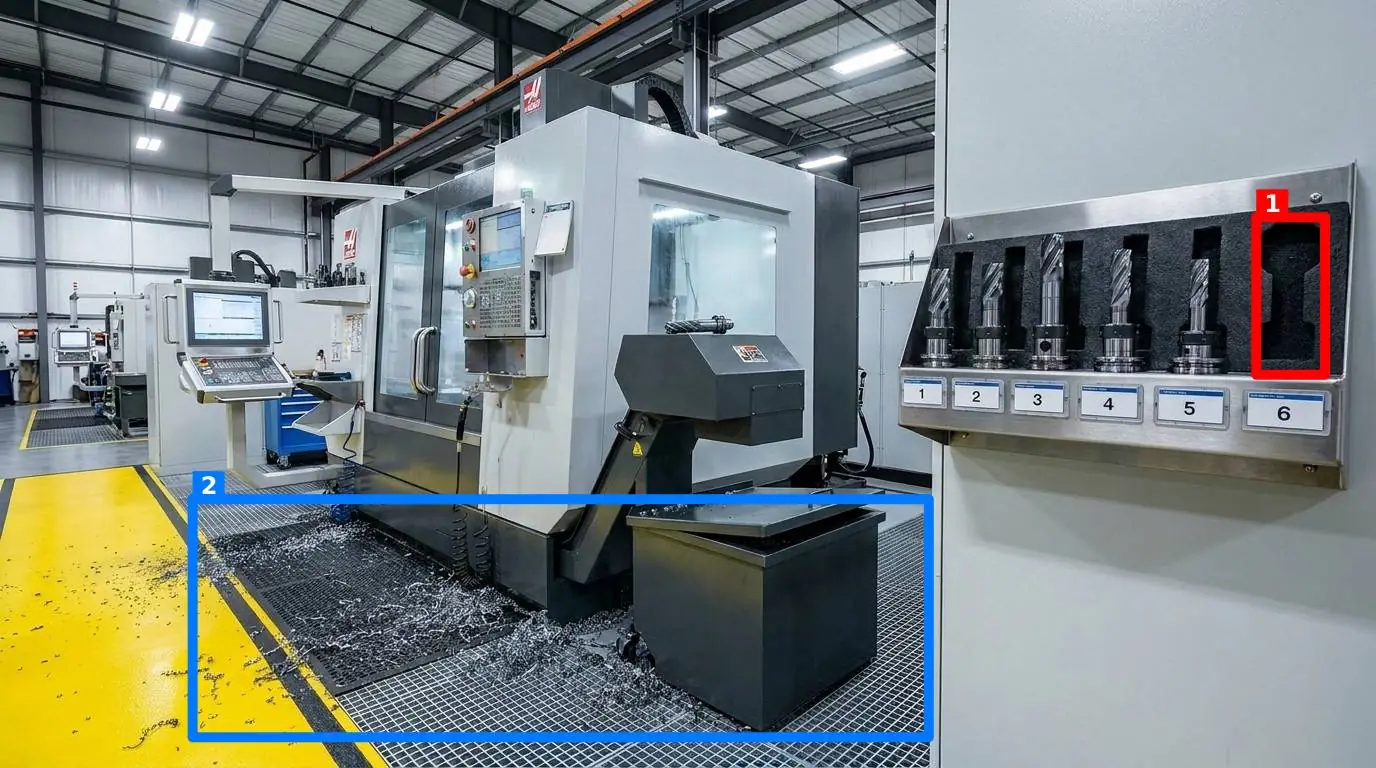
This is where a visual verification tool like SnapAudit changes the dynamic entirely. Instead of filling out a twenty-point checklist, a worker simply opens the site in their phone browser—with no app to install—and takes a single photograph of the electrical station. The AI instantly compares this photo against a reference photo of the same station, which was previously defined by the manager to show exactly how the station should look. Within seconds, the AI returns a score out of 100, a short guiding message for the worker, and clear, colored boxes drawn directly on the photo around any identified problems, such as a missing rubber mat or a blocked panel.
You can easily toggle which of the five criteria—presence, cleanliness, clutter, position, or orientation—apply to each specific control point. To ensure total honesty on the floor, the system automatically checks the photo freshness from the image metadata, ensuring that an old, pre-saved picture cannot be re-submitted as today's live audit. This ensures that your walkthroughs reflect actual, real-time conditions on the floor, keeping your safety standards from slipping, as discussed in our guide on how to keep 5S Lean Six Sigma standards from slipping.
An Actionable Checklist for High-Risk Zones
To help your team execute consistent inspections, it is useful to map out your high-risk electrical zones and define the exact visual standards required for each. The table below outlines the core check points that should be included in your regular floor rounds. By establishing these clear visual baselines, you make it easy for any operator to perform a high-quality inspection in seconds.
| Electrical Zone | Common Visual Hazard | Required Visual Standard |
|---|---|---|
| Main Distribution Boards | Pallets, trash bins, or maintenance tools stored within the clearance zone. | A painted yellow boundary line on the floor with a 36-inch clear radius; zero items stored inside. |
| Sub-panels & Disconnects | Panel doors left unlatched, keys left in locks, or missing hazard placards. | Doors shut and latched tightly; warning labels clean, legible, and properly oriented. |
| Operator Workstations | Frayed machine power cords, daisy-chained power strips, or cables lying in walkways. | All cables organized on overhead hooks or cable trays; zero direct floor contact in walking paths. |
| Battery Charging Areas | Corrosion on contacts, blocked eyewash stations, or missing personal protective equipment. | Contacts clean and shiny; eyewash station clear of obstruction; PPE cabinet fully stocked and visible. |
By grouping these individual points into a single round in SnapAudit, a supervisor can complete a comprehensive walkthrough of an entire department in just a few minutes. Because the visual evidence is recorded instantly, results are immediately delivered by email and Telegram to whoever is on the notification list for that specific room—including maintenance technicians or external safety officers who may not even have an account on the platform. This keeps your entire team informed of hazards in real time, without requiring anyone to log into a complicated dashboard. This visual approach is a major shift from traditional models, as detailed in our article comparing 5S vs 6S floor safety standards.
How to Start Improving Your Floor Standards Today
Improving your floor safety does not require a massive capital expenditure or a months-long software implementation. You can start building a more reliable safety culture today by taking three practical steps that focus on visual clarity and immediate feedback loops.
- Identify your three highest-risk zones: Walk your floor today and locate the three electrical panels or workstations that are most prone to clutter or neglect. This is usually where high traffic meets tight storage space.
- Define the perfect visual standard: Clean those areas completely. Paint your clearance boundaries, return every tool to its shadow board, and ensure all warning labels are perfectly visible. Take a single, clear reference photo of each zone in this ideal state. This photo is now your official safety standard.
- Review your inspection tools: Evaluate how much time your team spends filling out redundant paper checklists. If you find that your current processes are failing to catch real-world hazards, explore how a simple, image-based platform can streamline your workflow. You can review our pricing to see how cost-effective it is to bring modern, AI-assisted visual verification to your operations.
By shifting from a culture of checking boxes to a culture of maintaining visual standards, you give your team the tools they need to keep the floor safe, compliant, and productive. Over time, you can track the history of each individual point and use a Pareto view to see exactly which problems recur most frequently, allowing you to address root causes—like poor storage layout or inadequate operator training—before they lead to a serious safety incident. Start small, build consistency, and let visual evidence do the heavy lifting.