5S vs 6S: Does Adding Safety Actually Improve Your Floor?
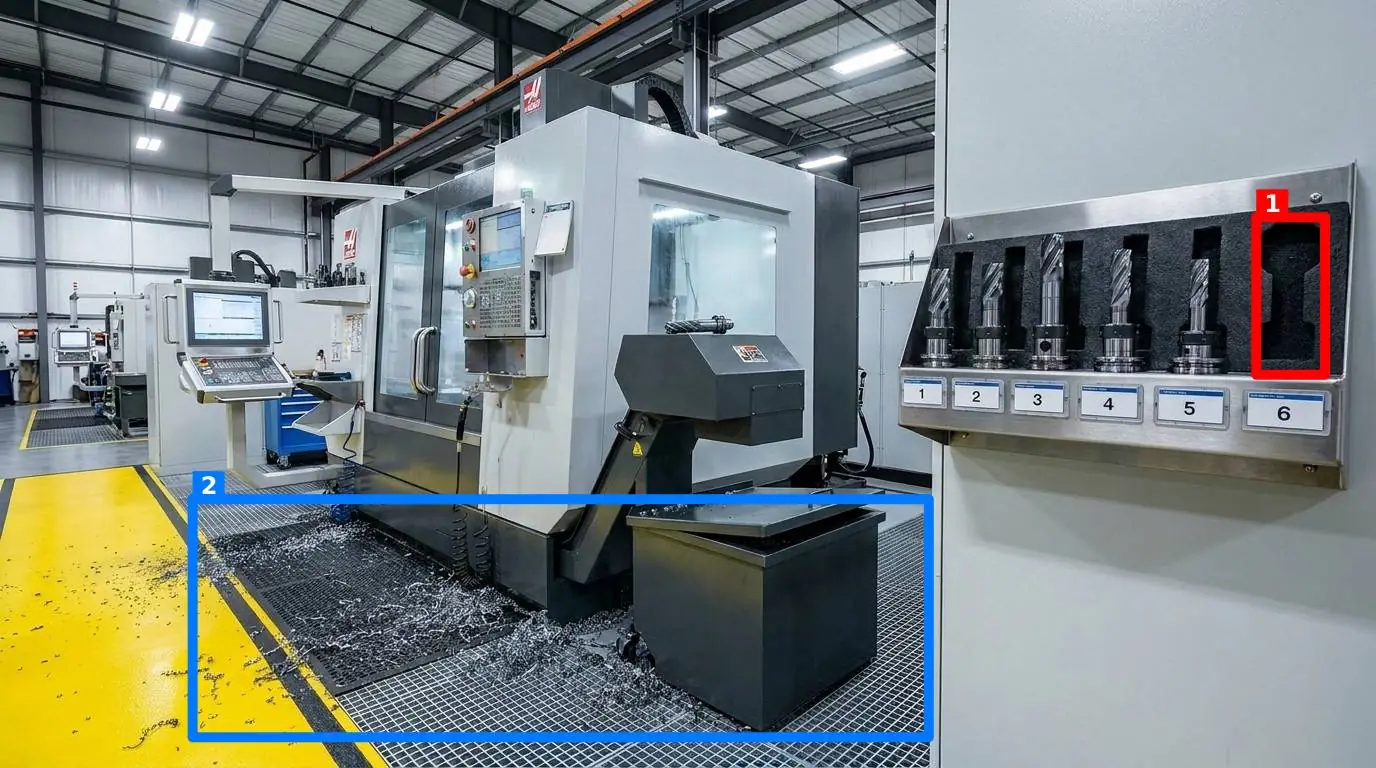
Your shift starts at 06:00, but you are on the floor by 05:45. You walk past the assembly line and see the daily friction points: a torque wrench sitting on top of an electrical cabinet instead of its shadow board, a half-empty bottle of degreaser on a packaging table, and a fire exit door propped open by a pallet. You have standard operating procedures and laminated checklists hanging from columns, yet the floor constantly drifts toward chaos. When you look for ways to regain control, you inevitably run into the debate of 5s vs 6s. On paper, the choice seems obvious. Why wouldn't you add Safety as an explicit sixth pillar to the traditional lean methodology of Sort, Set in Order, Shine, Standardize, and Sustain? But on the actual shop floor, where operators must hit cycle times and supervisors are drowning in paperwork, adding another category to your audits can feel like administrative bloat. To make a real difference, you need to understand whether this extra step actually keeps your people safer or simply creates more boxes to tick.
5S vs 6S: A Side-by-Side Comparison
Let us strip away the consulting jargon. The traditional 5S framework was designed to eliminate waste and optimize flow by organizing the physical workspace. 6S takes that exact same foundation and appends Safety as a distinct, sixth phase. To decide which approach fits your operation, you have to look at how they translate to daily actions on the line. Below is a breakdown of how these two methodologies approach the same physical realities.
| Step | 5S Focus | 6S Focus |
|---|---|---|
| Sort | Remove unnecessary tools and scrap. | Identify and remove hazards during sorting, such as frayed electrical cords. |
| Set in Order | Assign a dedicated place for every tool. | Position tools to prevent ergonomic strain and blocked pathways. |
| Shine | Clean the workstation and inspect equipment. | Clean up leaks, dust, and spills that cause slips or fires. |
| Standardize | Create visual rules to maintain the first three steps. | Integrate safety warnings and PPE requirements into visual standards. |
| Sustain | Build habits through regular audits and feedback. | Train staff to call out deviations and maintain discipline. |
| Safety | Treated as an inherent outcome of the first five steps. | Explicitly audited as a standalone sixth pillar. |
Why the Sixth 'S' Can Dilute Floor Discipline
There is a common trap in industrial management: when you make everything a priority, nothing is a priority. In many production environments, adding a dedicated Safety step to your audit checklist actually achieves the opposite of its intent. It signals to your team that safety is a separate task—something you look at during the safety portion of the walk, rather than an inseparable characteristic of a well-run station.
When safety is siloed, you get compliance theater. An operator might meticulously arrange their tools during the Set in Order phase, but ignore a blocked electrical panel because the safety audit is not until Friday. True safety is a lagging indicator of order. If a workstation is clean, organized, and standardized, it is almost always safe. A torque wrench on a shadow board cannot fall on someone's foot. A clean concrete floor cannot cause a slip.
If you are already running checklists on paper, adding a sixth category often leads to audit fatigue. Shift leads start pencil-whipping the checklists just to get back to production. They check Yes on safety compliance because it is easier than writing up a work order for a slightly damaged guard rail. If you want to understand why your current auditing system is failing to catch these details, it is worth looking at why your 5S audit checklist lies to you and how manual tick-boxes mask the actual state of your floor.
Where Safety and Order Break Down in Practice
To understand how to audit this effectively, we must look at where the system actually breaks down. It is rarely the major failures that shut down a line; it is the slow accumulation of small deviations on manufacturing and production floors.
The Maintenance Workstation
A maintenance technician is called to fix a conveyor belt. Once the job is done, the line starts running, but a wire brush and a half-used can of solvent are left on top of the motor housing. In a strict 5S system, this is a failure of Sort and Shine. In a 6S system, the tool on the vibrating motor is a projectile hazard. Either way, the failure is identical: the station was not returned to its defined baseline.
The Shipping Dock and Walkways
In high-volume shipping bays, a pallet of heavy cardboard boxes encroaches onto the green-painted pedestrian walkway. A forklift operator turning a tight corner has their line of sight partially blocked. This is a classic Set in Order failure that immediately becomes a critical safety incident. If your floor audits do not catch this deviation instantly, you are running on borrowed time.
Chemical Storage and Dispensing
In industrial finishing rooms, a supervisor notices a bottle of industrial degreaser sitting on a shelf meant for food-grade sanitizers. The bottle is missing its secondary label. This is an immediate risk to everyone on that shift. To keep these standards from slipping, you need a way to verify the exact position and labeling of these items. You can read more about maintaining these rigorous visual baselines in our guide on how to keep 5S Lean Six Sigma standards from slipping.
Moving from Checklists to Visual Reality
If paper forms and digital checklist apps are not keeping your floor clean or safe, it is because they ask the wrong thing of your people. Traditional checklists ask an auditor to read a list of thirty questions, make a subjective judgment, and record a response. This process is slow, subjective, and highly prone to human error.
Instead of asking your team to fill out checklists, you should ask them to verify a visual standard. A visual standard does not require interpretation. It is binary: the station either matches the standard, or it does not. This is where modern technology can step in to support your team without adding administrative friction. Rather than forcing workers to download a complex mobile app, you can use a browser-based tool like SnapAudit. The process is straightforward: an operations lead defines specific control points—such as a packing station, an assembly bench, or an eyewash station—and takes a single reference photo showing exactly how that area must look when it is clean, safe, and compliant.
When a worker performs a walkthrough, they simply open the site in their phone browser and take a photo of the station. There is no app to install. An AI instantly compares the new photo against your reference photo, looking at five toggleable criteria: the presence of required items, cleanliness, clutter, position, and orientation. Within seconds, the system returns an objective score out of 100, a short message for the worker, and clear, colored boxes drawn directly on the photo around any problems—such as a propped-open fire door or a misplaced aerosol can.
Setting Up a Visual Audit Round
To make visual standards work on a busy floor, you need to group stations into logical paths that an operator can walk in under ten minutes. Here is a practical, step-by-step method to build a visual audit round that covers both safety and order:
- Identify High-Risk Control Points: Select five to ten areas where deviations happen most frequently, such as assembly stations, chemical lockers, or emergency exits.
- Establish the Gold Standard: Clean, organize, and secure each station until it is in perfect compliance with both your 5S and safety standards.
- Capture the Reference Photos: Take one clear photo of each compliant station. This photo becomes the permanent visual contract for that control point.
- Group Points into a Round: Organize these control points into a logical walking sequence to systematically cover the entire department.
- Set Up Notifications: Configure who needs to see the results. With SnapAudit, you can set up the system to deliver the audit results directly by email or Telegram to whoever is on the notification list for that specific room, even if they do not have an account.
- Verify Photo Freshness: The system automatically checks the image metadata to verify photo freshness, preventing workers from uploading old, pre-saved photos.
By using this visual approach, you build a historical record for every single control point. Over time, you can access a Pareto view of which problems recur most frequently, allowing you to address root causes rather than repeatedly nagging your operators.
How to Start on Your Floor Tomorrow
If you are stuck debating whether to roll out a 5S or 6S program, the best thing you can do is stop planning and start executing. Your operators do not need a new poster in the breakroom; they need clarity. Start with a single workstation—ideally the one that causes the most headaches during shift handovers. Spend thirty minutes with the operator of that station. Sort the tools, clean the surfaces, and agree on exactly where the high-use items should sit. Take a photo of that completed station.
Use that photo as your baseline. Show it to the incoming shift and say, This is what this station looks like at handoff. Do not worry about whether you are doing 5S or 6S. Focus entirely on maintaining that single visual standard for one week. Once your team sees that a visual standard is easier to maintain than a paper checklist, you can begin expanding the process across your facility. If you are ready to see how visual AI can simplify this process, you can explore our pricing to find a plan that fits your operation.