Cleaning and housekeeping inspections, graded automatically
A signature on the door card says somebody was in the room. A photo says what state they left it in. SnapAudit grades that photo against the reference set for that room, scores it out of 100, and boxes what was missed — so quality control stops depending on a supervisor re-checking rooms at random.

What usually goes wrong
Three failure modes we hear about repeatedly, and what changes when the check produces a graded photo.
Supervisors re-check a sample of rooms. The sample is small, so the misses that matter are found by the guest or the client.
Every room is photographed as it is finished, and every photo is graded. The sample becomes all of it.
Cleaning contracts are judged on complaints, which is a lagging and hostile measure.
Dated scores per area give the client and the contractor the same picture before anyone complains.
New staff learn the standard by being corrected, which takes weeks and burns goodwill.
The reference photo is the standard, and the finding is boxed on their own picture. Correction arrives in seconds and is about the room, not the person.
Where teams point it first
Each of these is one control point: a spot you photograph once to set the standard, then re-photograph on a round.
Room release check
The room is photographed as it is finished. Bed made to the standard, amenities placed, nothing left behind — graded before it is released for the next guest.
Restroom and common-area rounds
Fixed points on a route, photographed each round. Supplies stocked, surfaces clear, bins emptied — with the time of each check recorded.
Contract evidence for the client
Timestamped photos and scores per area, so a service review is a set of dated records rather than a discussion about impressions.
Training new cleaners
The reference shows what finished looks like; the findings show what they missed. Both are pictures, which survives a language barrier better than a written standard.
How it works
Three steps, and only the first one takes any thought.
Photograph each area as it should be left
One reference per room or per fixed point on the route — that photo is the standard for it.
Staff photograph as they finish
Browser on their phone, about five seconds. Nothing to install and no account for them to keep track of.
Supervisors get only the failures
Passing rooms need no attention. Failures alert straight away, and the digest shows which areas and which shifts keep slipping.
A graded inspection
This is the output as the supervisor sees it — score, boxed findings, and a note written for the person who took the photo.
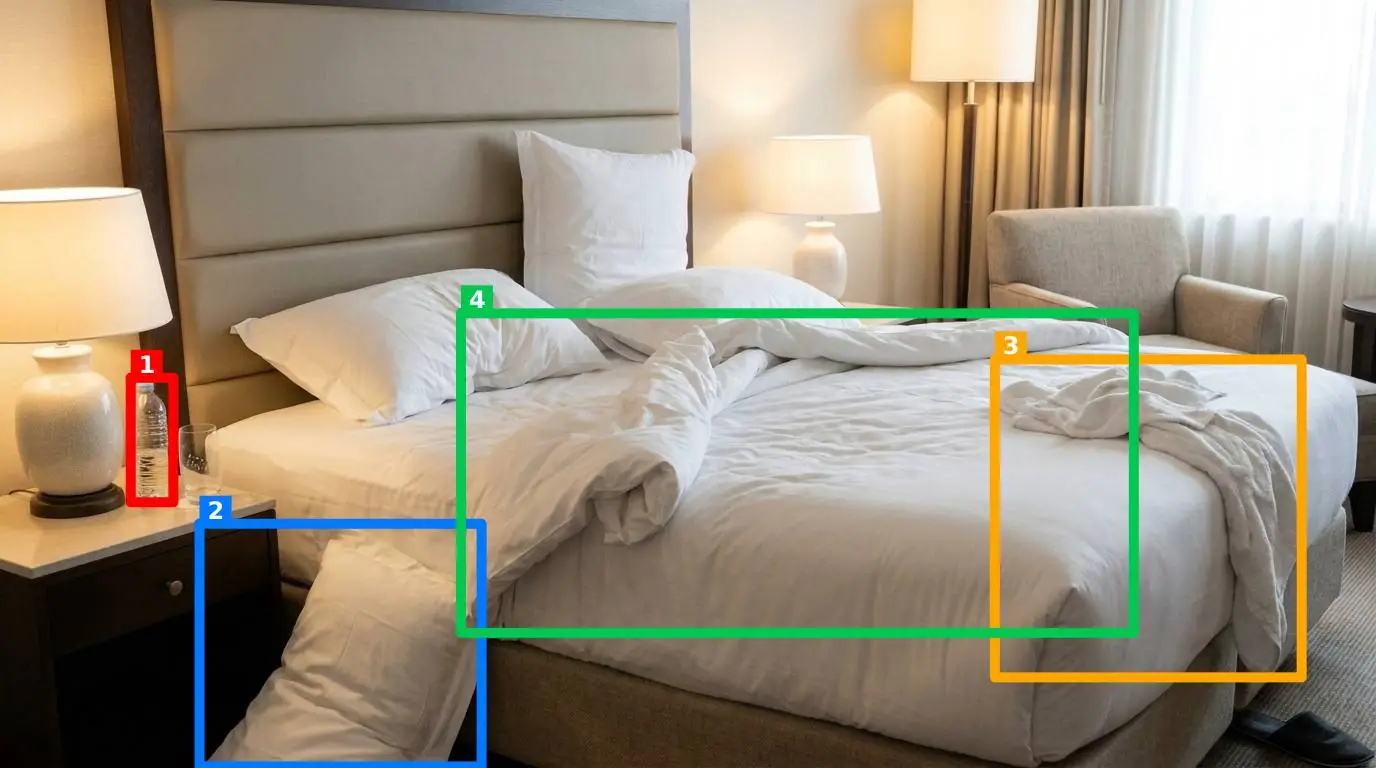
Guest room, release check
Graded against the reference set for this room
What changes
Not claims about your numbers — the mechanical consequences of grading a photo instead of ticking a box.
Every area checked, not a sample
Because grading costs seconds rather than a supervisor's round, coverage stops being a sampling decision.
A record the client can read
Dated scores and photos per area turn the service review into evidence instead of an exchange of impressions.
Faster onboarding
The standard is a picture and so is the correction, which travels further than a written spec with a team that does not share a first language.
Other industries
The mechanics are the same everywhere: a reference photo, a photo from the floor, and a graded difference.
Manufacturing
5S audits on the shop floor, graded from a photo of the workstation.
Read more →Restaurants & food service
Opening checks, kitchen cleanliness and station standards, graded from a photo.
Read more →Retail
Store standards, shelf presentation and back-of-house, graded from a photo.
Read more →Grade one of your own rooms
150 free inspections over 14 days. No credit card, nothing to install.
Start free