5S audit software for the shop floor
Your operator photographs the workstation at shift end. The AI compares it against the reference you set for that exact station, scores it out of 100, and boxes what moved, went missing, or should not be there. The supervisor reads a report instead of walking the floor with a clipboard.
What usually goes wrong
Three failure modes we hear about repeatedly, and what changes when the check produces a graded photo.
The 5S audit happens when the auditor has time, which is never the same day twice. Scores drift with whoever is holding the clipboard.
Every station is graded against the same reference photo and the same criteria, so a 62 in March means what a 62 meant in January.
Findings live in a spreadsheet nobody opens until the next audit, so the same missing torque wrench is written up four months running.
Each finding is a boxed region on the photo with a one-line description, and the Pareto view shows which kinds of finding keep coming back.
Second and third shift are audited least and slip most, because nobody wants to walk the floor at 3am.
The operator's own phone does it in about five seconds at shift end. Coverage stops depending on who is willing to be there.
Where teams point it first
Each of these is one control point: a spot you photograph once to set the standard, then re-photograph on a round.
Shift-end workstation check
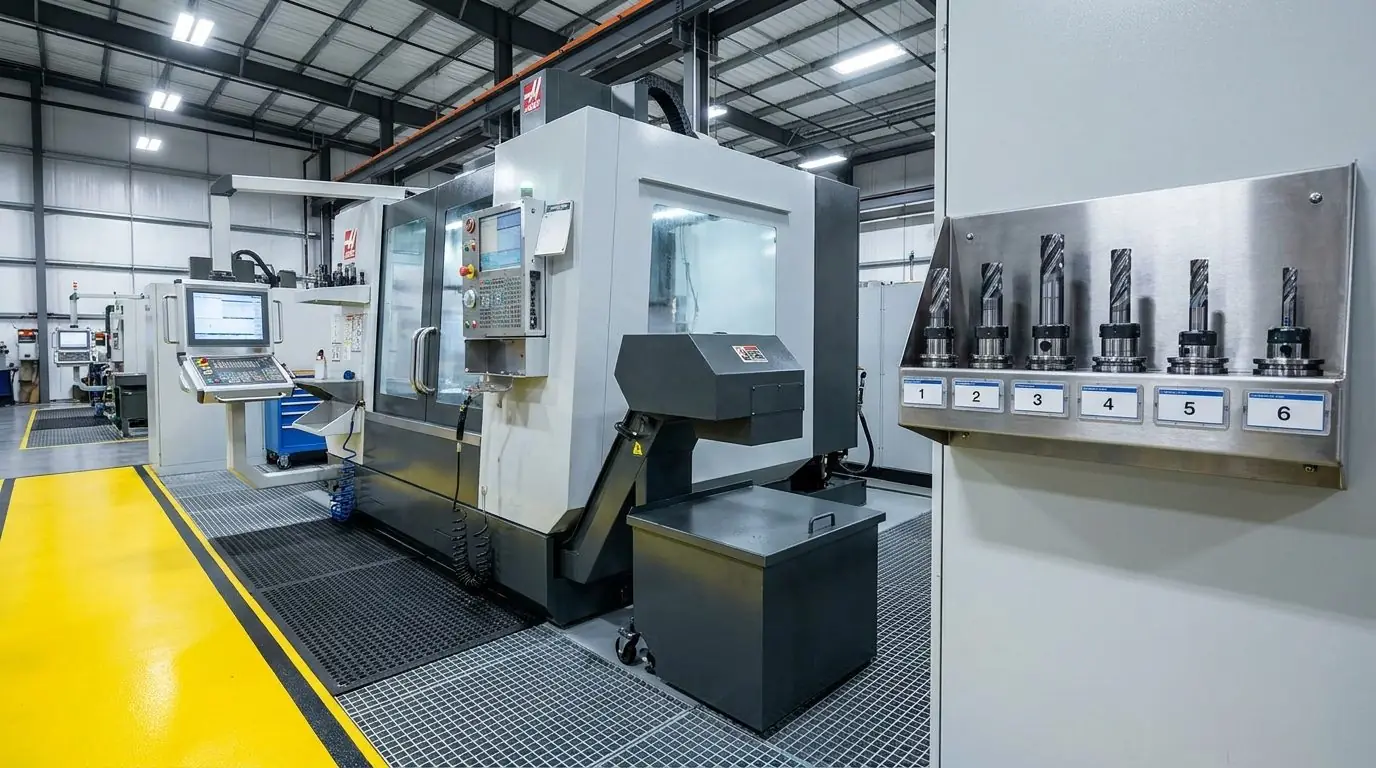
One photo per station at handover. Tools back on the shadow board, no stock left on the bench, walkway clear. The next shift starts from a known state instead of an argument.
Gemba walk without the walk
A round covers every station in a cell in one pass on the phone. The digest lands in the plant manager's inbox with scores, photos and the findings that repeated.
Shadow board and tool control
The reference photo is the shadow board as it should look. A missing tool is a detection, not something someone notices two days later when it is needed.
Evidence for the customer audit
Every inspection keeps its timestamped photo, so when a customer asks how 5S is actually maintained you show a year of dated evidence rather than a policy document.
How it works
Three steps, and only the first one takes any thought.
Set the reference once
Photograph each workstation in the state you want it in. That photo becomes the standard the AI grades against — no checklist to write.
Operators photograph the station
In the browser on their own phone, in about five seconds. Nothing to install, no account for them to manage.
You read the result
Score, boxed findings, and a short note in plain language. Failures alert you the moment they happen; the weekly digest shows which stations keep slipping.
A graded inspection
This is the output as the supervisor sees it — score, boxed findings, and a note written for the person who took the photo.
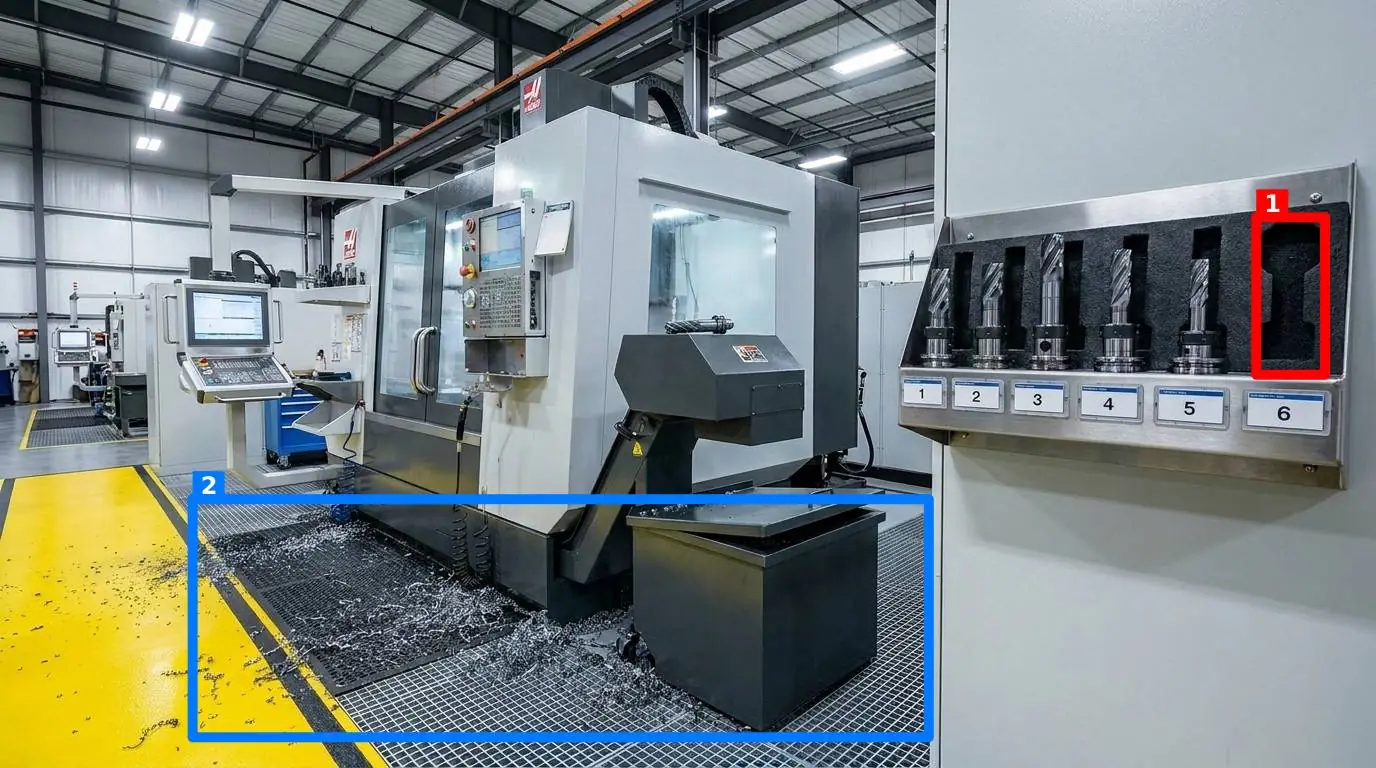
CNC cell, workstation 4
End of second shift, graded against the cell reference
What changes
Not claims about your numbers — the mechanical consequences of grading a photo instead of ticking a box.
Audits stop being an event
A round takes minutes on a phone rather than an afternoon with a clipboard, so it happens weekly instead of when the calendar forces it.
One standard, every shift
The same reference and the same criteria grade first, second and third shift, so the numbers are comparable rather than a measure of who audited.
Dated photographic evidence
Every inspection keeps its photo and timestamp. Useful when a customer or a certification body asks what was actually happening on a given day.
Other industries
The mechanics are the same everywhere: a reference photo, a photo from the floor, and a graded difference.
Restaurants & food service
Opening checks, kitchen cleanliness and station standards, graded from a photo.
Read more →Retail
Store standards, shelf presentation and back-of-house, graded from a photo.
Read more →Facilities & housekeeping
Cleaning and housekeeping inspections, graded from the cleaner's own photo.
Read more →See what the AI finds on your own shop floor
150 free inspections over 14 days. No credit card, nothing to install.
Start free